
The MOT is one of those things most UK drivers know they need — but few fully understand. What exactly does the tester check? How much should you pay? What happens if you fail? And how do you make sure you never accidentally drive without one? This guide answers all of it: everything a UK driver needs to know about the MOT test, in one place, with links to our detailed specialist guides on each topic.
What Is an MOT Test?
MOT stands for Ministry of Transport, the government department that introduced the test in 1960. Today the scheme is administered by the DVSA (Driver and Vehicle Standards Agency). It is a legally required annual inspection that checks whether a vehicle meets minimum road safety and environmental standards.
It is important to understand what the MOT is not. It is not a guarantee of your vehicle’s overall mechanical condition or reliability — it only confirms the vehicle met the required standards on the day it was tested. A car can pass its MOT and still develop a fault the following week. If you want the full picture of what the inspection involves, read our dedicated guide: What Is an MOT Test?
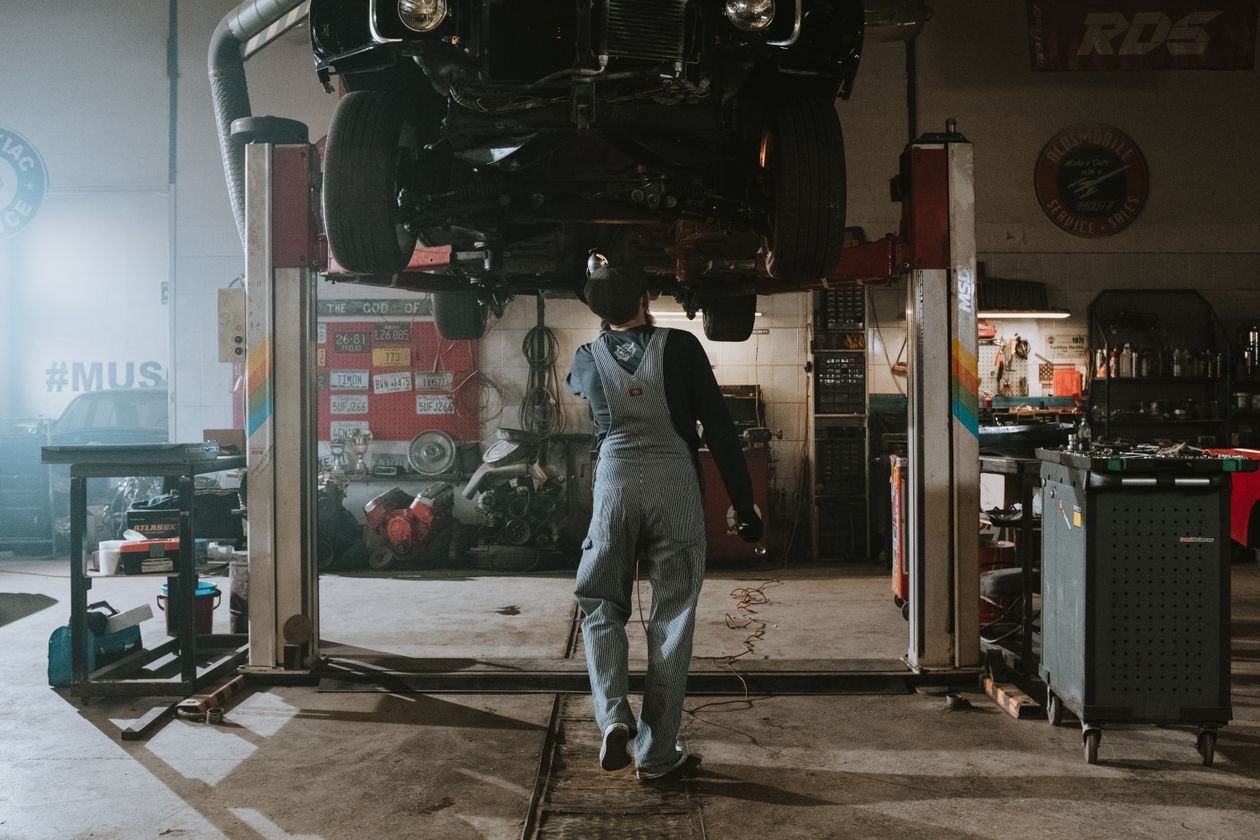
The test itself usually takes 45 minutes to an hour. Your vehicle will be examined on a ramp and, for most cars, on a rolling road brake tester. At the end you receive a result: pass, or fail with the reasons listed. Since 29 April 2024, pass certificates are digital-only — paper pass certificates were discontinued — so your result lives on the official MOT history service, and keeping your registration number accessible matters more than ever.
When Do You Need an MOT?
Most cars, vans and motorcycles need their first MOT three years after the date they were first registered, then every year after that. The date is tied to the anniversary of registration, not to when you bought the vehicle.
One useful rule many drivers miss: you can get your MOT done up to one month (minus a day) before it is due — and if you do, the new certificate is dated from the old expiry date, not from the test date. So if your MOT expires on 15 May, you can test from 16 April and keep the full year. You lose nothing by testing early.
Driving without a valid MOT when one is required is illegal: you risk a fine of up to £1,000 and your insurance may be invalidated. To make sure it never happens to you, see our MOT due date checker guide, which explains how to find your exact expiry date and set up free reminders.
What Does an MOT Test Check?
A full MOT covers dozens of individual inspection points. The main areas the tester examines are:
| Area | What the tester looks at |
|---|---|
| Lights & electrical | Headlights (aim and condition), brake lights, indicators, number plate lights, hazard lights, interior lights where fitted |
| Tyres & wheels | Tread depth (minimum 1.6mm across the central three-quarters), condition, correct size and type, wheel nuts |
| Brakes | Brake performance on the rolling road, condition of discs, pads, pipes and hoses, handbrake efficiency |
| Steering & suspension | Steering free play, power steering operation, shock absorbers, springs, suspension joints and bearings |
| Seatbelts & restraints | Belt condition (no fraying or cuts), buckles, retractors, anchor points; airbags where fitted |
| Mirrors, glass & wipers | Windscreen damage (especially in the driver’s line of sight), mirrors, wipers and washers |
| Exhaust & emissions | Exhaust system condition and security, smoke opacity (diesels), catalytic converter presence, engine management warning light |
| Body & structure | Corrosion in prescribed areas, sharp edges, doors, bonnet and boot security |
| Registration & identity | Number plates (legible, correctly spaced, well lit), VIN, horn, fuel system for leaks |
| Visibility | Dashboard visibility, windscreen washers, demisters |
The test does not check the engine, clutch or gearbox internally — those are covered by a service, not the MOT. It also does not assess general wear that does not affect safety or emissions.
Two things surprise drivers most. First, simple defects — a blown bulb, a worn wiper blade, a dirty number plate — are among the most common reasons for failure, and all are fixable at home in minutes. Second, faults are graded: a dangerous fault means you cannot drive the vehicle at all until it is repaired, while a major fault is an automatic fail. See the most common MOT failures and how to avoid them, plus our 10 practical pre-test checks that dramatically improve your odds of passing first time.
Own an electric or hybrid car? There is no emissions test for EVs, but testers now check high-voltage cable condition and labelling, charging port condition, and the AVAS low-speed warning sound. See what’s different for EV owners.
And if you regularly travel with a dog or cat, be aware: clawed seat belts, blocked seat mechanisms and damaged upholstery can all cause failures. Our guide for pet owners explains how to protect your car and pass.
How Much Does an MOT Cost?
The MOT fee is capped by law, not fixed — test centres may charge up to the maximum but are free to charge less. Many garages undercut the cap, especially when the MOT is booked alongside a service, so it is always worth comparing prices locally.
| Vehicle class | Maximum legal fee |
|---|---|
| Class 4 — cars, motor caravans, small goods vehicles | £54.85 |
| Class 1 & 2 — standard motorcycles | £29.65 (£37.80 with a sidecar) |
The £54.85 maximum for a car has been frozen since 2010 — the industry is currently lobbying for an increase — so in real terms the test has never been cheaper. Any test centre charging more than the cap is breaking the rules.
Remember that the fee only covers the test itself, not repairs. That is another reason a quick pre-MOT check at home pays for itself: catching a blown bulb or low screen wash before the test can save you a retest and repair bill. If you do fail, retest costs follow strict rules — see the next section, or our full explainer: what happens if your car fails its MOT — retests, fees and your rights.
How to Check a Vehicle’s MOT History
Every MOT test result in Great Britain since 2005 is recorded against the vehicle: pass/fail outcomes, mileage readings and advisory notes. This is a powerful tool, whether you own the car or are thinking of buying it.
For buyers, MOT history can reveal recurring faults, mileage inconsistencies (a classic sign of odometer tampering) or a pattern of neglect that a seller might not mention. For owners, it helps you prepare for your next test by reviewing past advisories. Use our free MOT history checker to pull a full report using just the registration number — our MOT history check guide explains exactly what each part of the report means and how to spot red flags.
What Happens If Your Car Fails Its MOT?
If your car fails, you receive a refusal notice listing every defect. Whether you can keep driving depends on two things:
- If your existing MOT certificate is still valid and none of the faults are classed as dangerous, you may continue to drive until the old certificate expires — though you must still keep the vehicle roadworthy.
- If any fault is classed as dangerous, you must not drive the vehicle until it is repaired — not even home, except to a pre-booked repair or retest appointment.
Retest fees are set by law:
- Free partial retest — if the vehicle stays at the test station for repair and is retested within 10 working days.
- Up to half the fee — if you take the vehicle away but return it to the same station within 10 working days.
- Full fee — after 10 working days, or if you go to a different test station.
The 10-working-day window is strict, so book your repairs promptly. For the complete picture — your rights, what the refusal notice means, and how to appeal a result you disagree with — read our full guide to MOT failures, retests, fees and your rights.
Stay on Top of Your MOT
Missing your renewal date is easy and expensive — a fine of up to £1,000 plus invalid insurance. A few simple habits prevent it:
- Set a digital reminder — the DVSA offers free email and SMS reminders, and our CheckMyMOT homepage lets you set one up alongside a free history check.
- Test early — book up to a month (minus a day) before expiry; you keep the original date, so there is no downside.
- Keep past advisories in mind — check your MOT history a few weeks before the test and fix anything flagged last time.
- Know your exact date — if you are unsure when your MOT expires, our due date guide walks through the three ways to find it.
More MOT Guides
This page is the hub — each of these specialist guides goes deeper on one topic:
- MOT History Check — read a full DVSA test history and spot red flags before buying a used car.
- MOT Due Date Checker — find your expiry date and set up reminders so you never miss a test.
- 10 MOT Check Tips to Avoid Failing — practical pre-test checks you can do at home.
- Common MOT Failures — the most frequent reasons vehicles fail, and how to avoid them.
- What Happens If Your Car Fails — retests, fees and your rights, explained.
- What Is an MOT Test? — the inspection explained in detail.
- Electric Vehicles MOT Test — what’s different for EV and hybrid owners.
- MOT Test Changes — the latest UK rules and DVSA guidance.
- MOT Test Frequency — the 2-year proposal, and why it was rejected.
- How Pets Can Affect Your Car’s MOT — tips for pet-owning drivers.
Frequently Asked Questions
Do I need an MOT for a brand new car?
No. New cars, vans and motorcycles don’t need an MOT until three years after their first registration date.
Can I drive with an expired MOT?
No, except to a pre-booked MOT test appointment. Driving without a valid MOT when one is required can result in a fine of up to £1,000, and your insurance may be invalidated.
How far back does MOT history go?
MOT history records are available from 2005 onwards, covering every test carried out on the vehicle since then. You can view them free with our MOT history checker.
Is checking MOT history free?
Yes. The official DVSA data is free to access, and our checker pulls it directly from those records at no cost.
How early can I get my MOT done?
Up to one month (minus a day) before your current certificate expires. Test within that window and the new certificate keeps the original expiry date, so you don’t lose any time.
How much does a retest cost?
It depends on timing: free if the vehicle stays at the test station and is retested within 10 working days; up to half the fee if taken away but returned to the same station within 10 working days; a full fee after 10 working days or at a different station.