
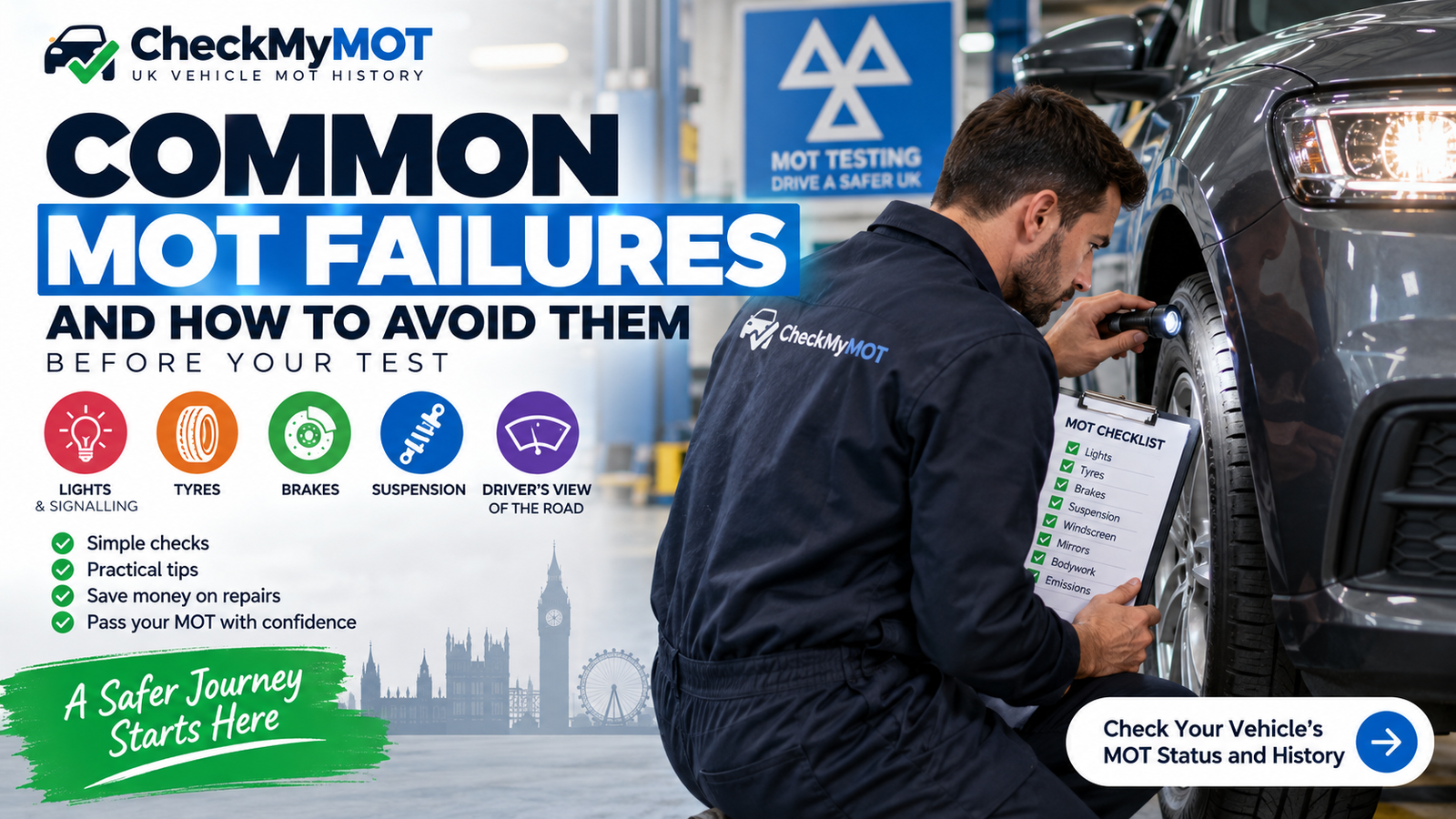
Failing an MOT can be frustrating. You book the test expecting a simple pass, only to discover that a faulty bulb, worn tyre, weak suspension component or obstructed windscreen has turned into an unexpected repair bill.
The good news is that many common MOT failures can be spotted before you take your car to the test centre. A few simple checks at home can help you identify obvious problems, fix them early and give your vehicle a better chance of passing first time.
Whether your MOT is due soon or you simply want to stay on top of your car’s condition, this MOT preparation UK guide explains what to check and how to prepare.
What Are the Most Common MOT Failures?
An MOT test checks whether your vehicle meets minimum legal safety and environmental standards. It covers areas including lights, brakes, tyres, steering, suspension, visibility, bodywork and emissions.
Some failures are relatively simple to prevent, while others require a qualified mechanic to diagnose and repair.
Here are some of the areas worth checking before your MOT.
1. Lighting and Signalling Problems
Lighting and signalling faults are among the issues that can cause an MOT failure.
Your vehicle’s exterior lights need to work correctly and, where applicable, be in the required condition. This includes:
- Headlights
- Brake lights
- Rear lights
- Indicators
- Hazard warning lights
- Number plate lights
- Rear fog lights
How to check your lights
Walk around the vehicle while someone operates the controls. Check that each light illuminates properly and that the lenses aren’t excessively damaged.
A failed bulb is often inexpensive and straightforward to replace, making this one of the easiest items to address before your test.
Also clean dirty or heavily clouded light lenses where appropriate. If a lamp has a significant defect or the problem isn’t simply a bulb, have it inspected professionally.
2. Tyres: Condition, Tread and Damage
Tyres are another important area of common MOT failures because they directly affect your vehicle’s ability to grip the road and stop safely.
Before your MOT, inspect each tyre for:
- Insufficient tread
- Cuts or splits
- Bulges
- Cracks
- Exposed cords
- Uneven wear
- Incorrect or severely low pressure
For cars, the legal minimum tread depth is generally 1.6mm across the central three-quarters of the tread and around the entire circumference.
However, don’t wait until your tyres reach the legal minimum. Significant wear or damage can indicate that replacement is needed.
Check your tyre pressures
Use the vehicle manufacturer’s recommended pressures rather than guessing. You’ll usually find them in the handbook, on a label around the driver’s door area or elsewhere specified by the manufacturer.
Correct pressures can also help improve handling, braking, fuel economy and tyre life.
3. Brakes and Brake Components
Your brakes are one of the most important safety systems tested during an MOT.
Potential problems include worn brake components, damaged or corroded brake pipes and problems affecting braking performance.
You may notice warning signs before the test, such as:
- Squealing or grinding noises
- The car pulling to one side when braking
- Excessive brake pedal travel
- Vibrations when braking
- A brake warning light
- Reduced braking performance
Don’t ignore these symptoms simply because the car appears to stop normally.
What can you check yourself?
Look for warning lights on the dashboard and pay attention to how the vehicle behaves during normal driving.
Brake components themselves generally shouldn’t be dismantled or inspected unless you know what you’re doing. If you suspect a brake problem, arrange an inspection with a qualified mechanic.
4. Suspension Problems
Suspension components help keep your tyres in contact with the road while maintaining stability and ride control.
Worn or damaged suspension components can contribute to an MOT failure.
Watch for signs such as:
- Excessive bouncing
- Knocking or unusual noises
- The vehicle sitting unusually low on one side
- Poor handling
- Excessive body movement around corners
- Uneven tyre wear
Why suspension faults can be difficult to spot
Some suspension problems aren’t obvious during a basic visual inspection. Components can wear gradually without producing dramatic symptoms.
If your vehicle has high mileage, has recently developed unusual noises or feels different from normal, consider getting it inspected before the MOT rather than waiting for the test to identify the problem.
5. Driver’s View of the Road
Your windscreen and driver’s view are also important parts of the MOT.
Potential problems include damage to the windscreen in the driver’s critical viewing area and issues affecting visibility.
Before the test, check your windscreen for:
- Cracks
- Chips
- Significant damage
- Obstructions
- Excessive dirt
Don’t overlook windscreen wipers and washers
Wipers should clear the screen effectively, while washers need to provide sufficient fluid.
Replace worn or damaged wiper blades if they leave significant smears or fail to clear water properly.
Also make sure your screenwash reservoir isn’t empty.
6. Number Plates and Bodywork
Number plates need to be visible and meet the applicable requirements.
Check that your plates:
- Are securely attached
- Are clean
- Aren’t excessively damaged
- Remain clearly readable
It’s also worth walking around your vehicle to identify obvious bodywork issues, particularly anything that could create a safety concern.
Loose components, sharp edges or significant damage can potentially cause problems during an MOT.
7. Windscreen, Mirrors and Visibility
Your mirrors and other visibility-related components should also be checked.
Make sure:
- Required mirrors are present and usable
- Mirrors aren’t excessively damaged
- The windscreen is clean
- Windscreen wipers work correctly
- Washer fluid is available
- Nothing unnecessarily obstructs your view
Remove items such as unnecessary stickers or objects that interfere with the driver’s view.
8. Warning Lights and Dashboard Issues
Before taking your car for an MOT, switch on the ignition and look at the dashboard.
Warning lights can provide an early indication of a problem with systems such as:
- Brakes
- Airbags
- Engine management
- ABS
- Electronic stability systems
Not every dashboard light automatically means your car will fail, because MOT rules depend on the specific warning lamp and vehicle requirements. However, an illuminated warning light shouldn’t simply be ignored.
If a warning light remains on, investigate the underlying problem before the test.
Your Simple Pre-MOT DIY Checklist
Use this quick MOT checklist a few days before your appointment:
Lights
- Headlights work
- Brake lights work
- Indicators work
- Hazard lights work
- Rear fog light works
- Number plate lights work
Tyres
- Check tread depth
- Check tyre pressures
- Look for cuts and bulges
- Check for unusual or uneven wear
Visibility
- Windscreen is clean
- No significant windscreen damage
- Wipers clear the screen properly
- Screenwash reservoir is filled
- Mirrors are secure and usable
Brakes and suspension
- No unusual braking noises
- No brake warning lights
- Car doesn’t pull significantly when braking
- No unusual suspension noises
- No obvious signs of uneven ride height
General checks
- Number plates are clean and readable
- Horn works
- Seat belts appear secure and functional
- Dashboard warning lights have been investigated
This isn’t a substitute for an official MOT inspection, but it can help you identify obvious problems before your appointment.
How to Pass Your MOT First Time
If you’re wondering how to pass MOT testing first time, preparation is mostly about addressing obvious faults before the test rather than trying to “prepare” the car in a special way.
Start checking your vehicle one to two weeks before the MOT. That gives you time to arrange repairs if you discover something that needs professional attention.
Don’t leave everything until the day before. A simple bulb replacement may be quick, but tyres, brakes, suspension or emissions-related repairs can require more time and expense.
It’s also useful to review your vehicle’s previous MOT history. Previous failures and advisories can highlight areas that have caused problems before, although an advisory from an earlier test doesn’t automatically mean the vehicle will fail its next MOT.
What About MOT Advisories?
An MOT advisory is different from an MOT failure.
An advisory generally identifies something that isn’t necessarily serious enough to fail the test but may need attention in the future.
For example, a component may show signs of wear without yet reaching the threshold for failure.
Don’t automatically ignore advisories. Keeping an eye on them can help you deal with developing problems before they become more expensive repairs or safety concerns.
Check Your MOT History Before the Test
One of the easiest ways to prepare is to understand your car’s previous MOT record.
Looking at historical test information can help you identify:
- Previous MOT failures
- Advisories
- Mileage recorded at tests
- Previous test dates
- Patterns of recurring issues
CheckMyMOT makes it easier for UK motorists to review their vehicle’s MOT information before arranging their next test.
If you’re preparing for an upcoming MOT, check your vehicle’s status and history with CheckMyMOT so you know what has happened in previous tests and can make more informed preparation decisions.
Frequently Asked Questions
What are the most common MOT failures?
Common MOT failure areas include lighting and signalling, tyres, brakes, suspension and issues affecting the driver’s view of the road. Checking these areas before your test can help identify obvious problems.
How can I prepare my car for an MOT?
Check your lights, tyres, windscreen, wipers, washer fluid, mirrors, number plates, horn and dashboard warning lights. Also pay attention to unusual braking, suspension or handling symptoms.
Can I check my previous MOT history before the test?
Yes. Reviewing your vehicle’s previous MOT history can help you understand earlier failures and advisories. Use CheckMyMOT to check your vehicle’s MOT status and history before your next test.
Get Ready for Your Next MOT
An MOT failure doesn’t always mean there’s a major problem with your car. Sometimes the cause can be something as simple as a faulty bulb or worn wiper blade. The key is to identify potential problems early.
A few minutes spent on a basic MOT checklist, combined with a review of your previous MOT history, can help you prepare your vehicle and avoid unpleasant surprises.
Before your next test, check your car’s MOT status and history with CheckMyMOT and make your MOT preparation UK routine part of responsible car ownership.
The MOT checks important parts of your vehicle to make sure they meet legal safety and environmental standards, according to GOV.UK’s MOT guidance