
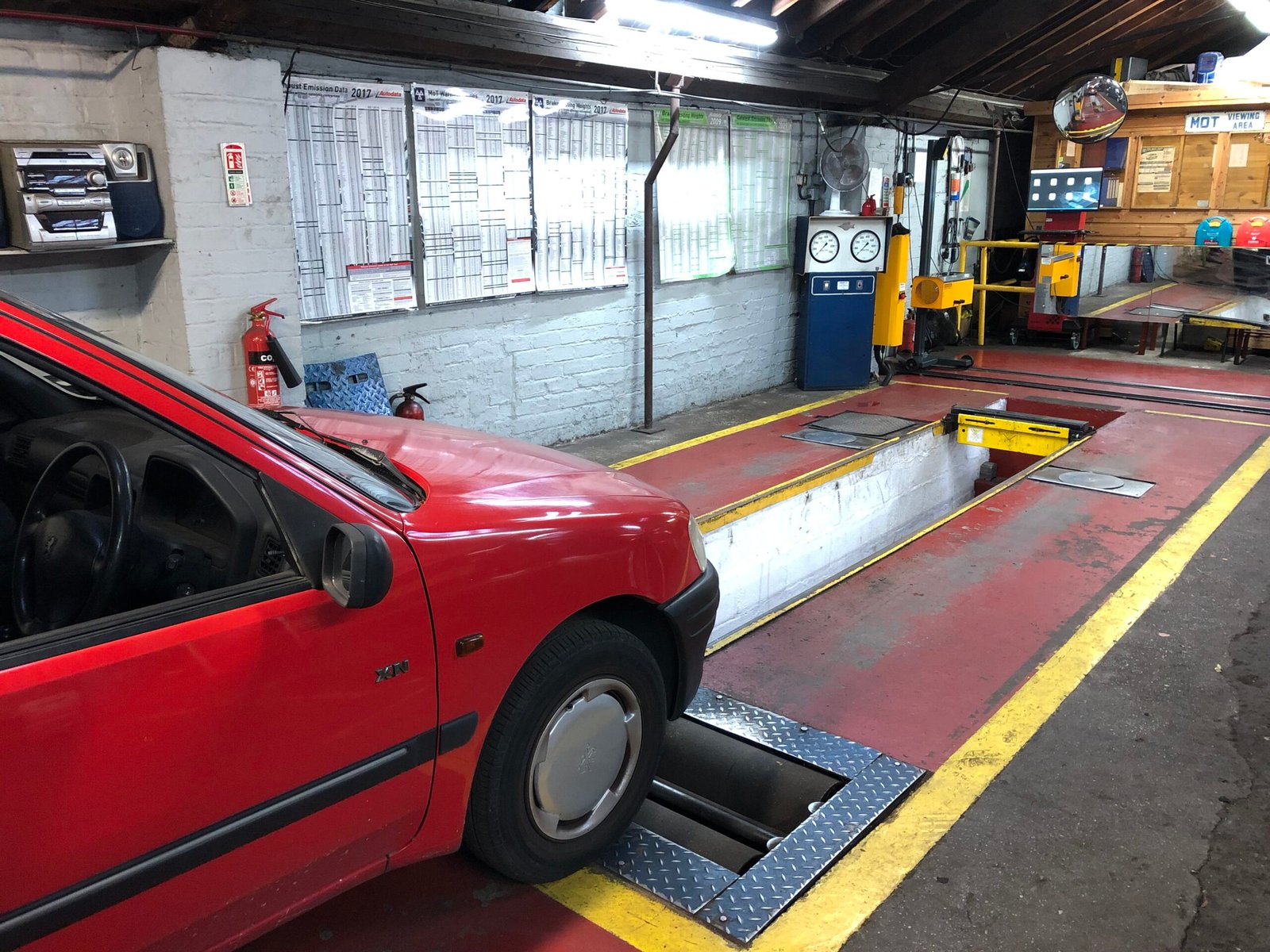
Short answer: yes, and it is one of the best-kept money-saving tricks in British motoring. Most councils run their own MOT test station for their fleet — the bin lorries, buses and vans — and by law those stations have to be open to the general public. They generally do no repairs, which means they have nothing to gain by failing your car. Some charge as little as £38.10 for a car MOT, against the legal maximum of £54.85. The catch is that “no repairs” cuts both ways: if your car fails badly, they can’t fix it, and you can’t always drive it away.
This guide explains what a council MOT centre actually is, what they charge, how to find one near you, and when you should use a normal garage instead. Every price below is taken from the council’s own published page — check it before you book, because councils do change their prices.
Before you book anything, make sure you know where you stand. Run the plate through our free MOT checker to see when your test is due and what your car failed on last time — that tells you whether a test-only centre is a good bet or a bad one.
What is a council MOT test centre?
Every council in the country owns vehicles. Refuse trucks, gritters, minibuses, pool cars, vans for the housing team — a big council can run hundreds of them, and they all need an annual MOT like yours does. Rather than sending them all to a local garage, many councils built their own test station and employ their own DVSA-authorised testers.
Those stations test the council’s own fleet first, but they are also open to the public. MoneySavingExpert, which has been recommending them for years, puts it plainly: by law these test centres (though not taxi or Crown stations) must be open to the general public. Doncaster Council says the same on its own page — it operates “an independent MOT testing station that not only tests our own vehicles but ones owned by the general public too”. Hundreds of people use Doncaster’s centre every month.
The important thing to understand is what they are not. They are not a garage. They do not do servicing, they do not do repairs, and in most cases they do not even sell you a bulb. Middlesbrough Council’s page is typical: “The MOT does not include any repairs, but we will carry out minor adjustments if required, for example headlamp adjustment.” Wyre Council puts it even more bluntly: “The centre specialises in MOTs only and does not undertake servicing or repairs.”
They are also not a separate, easier test. A council centre is authorised and monitored by the DVSA exactly like any other test station, the tester follows the same inspection manual, and the pass and fail standards are identical. A car that would fail at Kwik Fit fails at the council depot too. What changes is the incentive, not the test.
Why “no repairs” matters more than the price
The saving is real — £38.10 instead of £54.85 is £16.75 back in your pocket — but it is not the main reason drivers swear by council centres. The main reason is trust.
Think about how a normal garage makes its money from an MOT. The test fee is capped by law at £54.85 for a car, and most garages discount it to £35–£45 to get you through the door. The profit is in what comes after: the failed bulb, the worn brake pads, the advisory that becomes a repair. That is a perfectly legitimate business model, and most garages are honest about it — but it does create a conflict of interest. A garage that finds a fault gets paid to fix it. A garage that finds nothing gets £35.
A council test centre has no such conflict. It does not do repairs, so a fail earns it nothing and a pass costs it nothing. As Doncaster Council’s page quotes from MoneySavingExpert: “As they generally only carry out tests and don’t do repairs (always check), there’s no incentive for mechanics to find faults that don’t exist.” That is the whole pitch, and it is why the same MSE guide reports that “thousands of savvy MoneySavers have used these test centres and the vast majority report their cars either consistently pass the test, or need fewer repairs compared with MOTs done at other garages.”
None of this means every garage is out to fail you — the overwhelming majority are not, and the DVSA monitors test stations for exactly this kind of abuse. But if you have ever sat in a waiting room wondering whether the £400 repair list is real or invented, a test-only centre removes the question entirely. The tester has nothing to sell you, so the result is just the result.
What council MOT centres charge
The legal maximum for a standard car MOT (Class 4, up to 8 passenger seats) is £54.85, set by the DVSA and unchanged since April 2010. There is no VAT on the test fee. No test centre can charge you more than that for the test itself — but any centre can charge less, and council centres often do. Here is what a few of them actually charge, from their own websites:
| Council centre | Car MOT (Class 4) | Retest | Notes |
|---|---|---|---|
| Middlesbrough Council | £38.10 | Not stated | Classes 4, 5 and 7. Minor adjustments only (e.g. headlamp aim). Appointment only. |
| City of Doncaster Council | £45 | £10 | Classes 4, 5 and 7. No motorbike tests. Mon–Fri, 7am–6.30pm. Phone booking only. |
| Wyre Council | £50 | Free | Class 4 (cars, taxis, motorhomes). MOTs only, no servicing or repairs. Pay in advance. |
| Bromsgrove District Council | £54.85 | Not stated | Full legal maximum. Independent, no repair work. Appointments Mon–Fri at 10am. |
| Legal maximum (any centre) | £54.85 | — | Set by DVSA. No VAT on the test fee. |
Two things stand out from that table. First, the saving is real but uneven: Middlesbrough at £38.10 saves you £16.75 against the cap, while Bromsgrove charges the full £54.85 — the same as a main dealer. A council centre is not automatically cheap; it is automatically independent. Check the price on your own council’s page before you book, and compare it with the garages near you.
Second, retest fees vary. Doncaster charges £10 for a retest; Wyre offers free retests. The GOV.UK rule is that a partial retest is free if you leave the vehicle at the test centre for repair and it is retested within 10 working days — but a council centre does not do repairs, so that route does not quite work the way it does at a garage. Ask about the retest policy when you book, before you need it. Our full guide to what happens if your car fails its MOT explains the retest rules in detail.
The catch: when a council centre is the wrong choice
Council centres are a good deal for one kind of driver and a bad deal for another, and knowing which one you are is the whole trick. MoneySavingExpert draws the line exactly right: if your car is in moderate condition and likely to need only minor repairs, a council centre comes into its own. If your car is likely to need major repairs, think twice.
The reason is the rule that came in in 2018. If a tester finds a “dangerous” fault — the most serious category, things like severely worn brakes or a tyre with no tread — you cannot drive the car away, even if your old MOT still has time left on it. At a normal garage, the car stays on the ramp and gets fixed. At a council centre, there is nobody to fix it. Your only option is to have it towed or transported to a garage, which costs money and time.
So before you book a council test, be honest about your car. If you already know it needs work — the brakes have been grinding, the exhaust is blowing, a warning light has been on for a month — get the test done where the repair will happen. The £16 you save on the test fee is nothing against a recovery bill and a second test.
The other practical catches are smaller but worth knowing:
Booking is often old-fashioned. Doncaster takes bookings by phone only (01302 736851) and has no online booking system. Middlesbrough is appointment-only (01642 728066). Some centres only offer one appointment slot a day — Bromsgrove’s are at 10am, Monday to Friday. If you want to book online at 11pm, a council depot is probably not your centre.
They may not test your vehicle. Doncaster does not do motorbike tests. Some council stations only test certain classes — check the page for Classes 4, 5 and 7 before you turn up. If you drive a motorhome or a large van, confirm they can take the size and weight: many council depots can, because they test their own large vehicles, but not all of them will take a private motorhome, and some centres that test Class 7 vans will not test a vehicle over a certain height.
There is no waiting-room coffee and no courtesy car. These are working depots, not retail garages. Doncaster’s customers mention a small waiting room with a selection of magazines. Expect functional, not comfortable — and expect to wait or come back, because they will not lend you a car.
They are not everywhere. Not every council runs a public test station, and some that do only test their own fleet vehicles plus taxis. If your council does not offer one, the next council over might — but that is a drive, and it has to be worth the fuel.
Test-only centres that are not councils
Councils are not the only test-only game in town. A growing number of private centres operate on exactly the same model — test only, no repairs, no servicing — and advertise it as their selling point. You will see names like “test-only MOT centre” or garages whose website says, in capital letters, “NO REPAIRS, NO SERVICING”. The logic is identical: no repair work means no reason to invent a fault.
There is one difference worth noting. A private test-only centre is still a business, and its price is its own choice — some are cheap, some charge the full £54.85. A council centre’s price is set by the council, and it is usually published on the council’s website, which makes it easy to compare. Either way, the thing to look for is the same: a centre that states clearly, in writing, that it does no repairs.
Watch out for the opposite trick, too. Some garages advertise a very cheap MOT — £25, sometimes less — as a loss leader, and make the money back on repairs. A cheap test is not a scam in itself, and plenty of honest garages use the same tactic, but it is worth remembering that a test centre which loses money on the test has to make it somewhere. A council centre charging £38.10 is cheap because it has no repair bay to fill; a garage charging £25 may be cheap for a different reason. If you want the full picture on what a test should cost, our guide to MOT test prices breaks down the cap, the discounts and the retest fees.
How to find a council MOT centre near you
There is no national list, which is part of why these centres stay hidden. Here is the fastest way to find yours:
1. Search your council’s own website. Go to your council’s site and search “MOT testing” or “vehicle testing”. Most councils that run a public station have a dedicated page with prices, classes tested, opening hours and a phone number. Search “[your council name] MOT testing” in Google and the page usually comes straight up.
2. Check the neighbouring councils too. If yours does not run one, the council next door might. County councils, unitary authorities and large district councils are the most likely to have a depot; small district councils often do not.
3. Use our MOT centres directory. Our MOT centres directory lists 22,988 DVSA-authorised test stations across the UK, searchable by postcode or town. Council stations are in there alongside every other authorised centre — look for names containing “council”, “borough”, “county” or “city council” in the results, and cross-check the price on the council’s own page before you book.
4. Phone before you go. Council pages are not always kept up to date — Doncaster’s price page was last updated in March 2025, for example. A two-minute call confirms the price, the classes they test, whether they can take your vehicle, and the retest policy. It also gets you booked in, since many of them do not take online bookings.
5. Ask these three questions when you call. What is the price for my vehicle class? Do you carry out any repairs at all? And what is the retest fee if it fails? If the answers are “£38”, “no” and “£10”, you have found a proper test-only centre. If they say they do repairs, it is a garage that happens to be owned by the council — still fine, but not the same deal.
Before you book: a five-minute checklist
A test-only centre is at its best when your car is in reasonable shape and you just want an honest verdict. A few minutes of preparation makes a pass much more likely — and at a council centre, a pass is the whole point, because there is nobody there to fix a fail cheaply.
Check when your MOT is due. You can take the test up to a month (minus a day) before your current MOT expires and keep the same renewal date — so a test a month early costs you nothing in lost MOT time. Our guide on how early you can MOT your car explains the rule, and the MOT due date page has a calculator that works out your earliest test date.
Look at your last MOT result. Our free MOT checker shows your car’s full test history, including advisories from the last test. An advisory from last year that was never fixed is very likely to be a failure this year. Fix the cheap stuff first — bulbs, wipers, tyre pressures, washer fluid — before you book.
Read the common failures. More than a quarter of cars, vans and small passenger vehicles failed their MOT first time in the year to March 2026, according to DVSA figures quoted by MoneySavingExpert. Most of those failures are small things: a blown bulb, worn wipers, a tyre below the legal tread. Our guide to common MOT failures lists the ones that catch people out, and most of them take ten minutes and a few pounds to sort before the test.
Confirm your vehicle class. A standard car is Class 4. A van between 3,000kg and 3,500kg is Class 7, and the maximum fee is £58.60 instead of £54.85. Check the council page lists your class, and if you drive a motorhome, ask about height and weight limits — some depots can take them, some cannot.
What to do if it fails at a council centre
First, do not panic, and do not assume the fail is wrong. Council testers apply the same standard as every other tester, and a fail at a test-only centre is, if anything, more likely to be genuine — there is no financial reason to invent one. Ask the tester to show you the fault on the car. A good tester will walk you through it, and you are entitled to see the failure with your own eyes.
If you disagree with the result, you have the right to appeal to the DVSA. Ask the test station for a VT17 appeal form, do not have any repairs done, and contact the DVSA using the number on your fail certificate. The DVSA can re-inspect the car free of charge if the appeal is warranted. Do not repair the car before the appeal inspection, or the evidence is gone.
If the fail is genuine, you have two options. For minor failures — a bulb, a wiper, a tyre — get the repair done at a garage of your choice and bring the car back for a retest within 10 working days. Ask the council centre what its retest fee is before you leave; Doncaster charges £10, Wyre offers free retests, and other centres vary. For a major or dangerous fail, the car may not be legally driveable, so arrange recovery to a garage rather than driving it there yourself. Driving a car with a dangerous fault, or with no valid MOT, risks a fine of up to £1,000 — and your insurance may not cover you.
One more thing worth knowing: a fail at a council centre does not have to be retested at the same centre. You can take the car to any authorised test station for the retest, though you may pay a full test fee rather than a partial retest fee if you go elsewhere. The partial retest discount only applies at the same centre, within 10 working days.
Frequently asked questions
What is a council MOT test centre?
It is an MOT test station run by a local council, originally built to test the council’s own fleet of vehicles — bin lorries, buses, vans and pool cars. By law, these stations (except taxi and Crown stations) must be open to the general public. They generally carry out tests only and do no repairs or servicing.
Are council MOT tests cheaper?
Often, but not always. Middlesbrough Council charges £38.10 for a car MOT and Doncaster charges £45, against the legal maximum of £54.85. But Bromsgrove Council charges the full £54.85, so a council centre is not automatically the cheapest option. The real advantage is independence — the tester has no repair work to sell you — rather than the price alone. Always check the price on the council’s own page before booking.
Can a council MOT centre fail my car on purpose?
There is no reason for it to. Council testers are DVSA-authorised and monitored like any other tester, and the centre earns nothing from a fail because it does no repairs. That is the whole point of using one: the result is just the result. If you disagree with a fail, you can appeal to the DVSA using a VT17 form, and the DVSA will re-inspect the car free of charge if the appeal is warranted — but do not repair the car before the inspection.
How do I find a council MOT centre near me?
Search your council’s website for “MOT testing” — most councils that run a public station have a page with prices and a phone number. If your council does not run one, check the neighbouring councils. Our MOT centres directory lists all 22,988 DVSA-authorised stations in the UK, searchable by postcode or town — look for council names in the results, then confirm the price on the council’s own page.
What happens if my car fails at a council MOT centre?
The centre cannot repair it, so you will need to take it to a garage. For minor fails, get the work done and bring it back for a retest within 10 working days — Doncaster charges £10 for a retest, Wyre offers free retests, and other centres vary. If the fail is marked “dangerous”, you cannot drive the car away at all, even if your old MOT is still valid — it will need to be towed or transported to a garage.
Do council MOT centres test motorhomes and vans?
Many do, because they already test large council vehicles — but not all of them. Middlesbrough tests Classes 4, 5 and 7, and Wyre tests cars, taxis and motorhomes (Class 4). Doncaster tests Classes 4, 5 and 7 but does not test motorbikes. Always confirm your vehicle class, and the height and weight limits, by phone before you book.
A council MOT centre is not a magic trick — it is the same test, to the same standard, by the same kind of tester. What it gives you is a result you can trust, usually for less money, from someone with nothing to sell you. That is worth a phone call. Check your MOT due date and history first, sort the cheap fixes, then search your council’s site — or find a test centre near you — and book the test where nobody profits from a fail.