
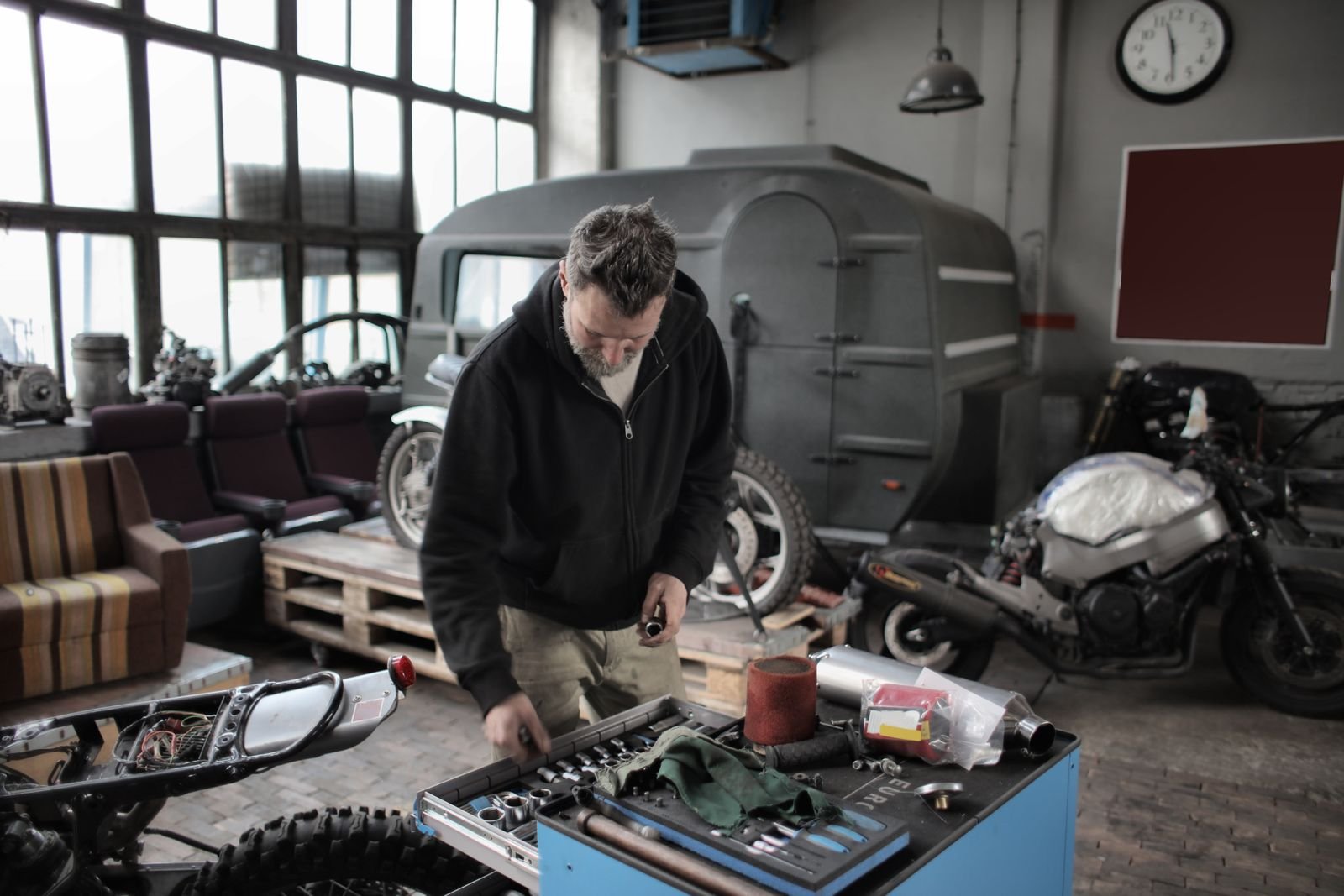
A motorcycle MOT is the annual check that decides whether your bike is fit to stay on the road. It is not a service. It is a safety inspection by a tester approved by the Driver and Vehicle Standards Agency, known as the DVSA. If your bike is three years old or more, you need one every year, and riding without a valid certificate, except in the narrow cases the law allows, can leave you in trouble with the police and with your insurer.
The good news is that a bike MOT is simpler and cheaper than a car MOT. The maximum fee is lower, the list of checks is shorter, and most failures are small jobs you can spot at home before you book. A blown bulb, a tyre close to the legal limit, or a brake light that only works from one control can each turn a routine visit into a fail and a second trip. The rules here apply in England, Scotland and Wales. Northern Ireland has a different booking system, so follow the local process there.
When does a motorcycle need its first MOT
A motorcycle, scooter or moped needs its first MOT by the third anniversary of its first registration. That date is shown on the V5C registration certificate, and it is the registration date that matters, not the date you bought the bike. After that, the MOT falls due every year, on the anniversary of the last test.
You do not have to wait until the old certificate runs out. You can get an MOT up to a month, minus a day, before it runs out and keep the same renewal date for the following year. If you test earlier than that window, you can still pass, but the renewal date for the following year changes.
There is one broad exception. A bike built or first registered more than 40 years ago, and not substantially changed in the last 30 years, does not need an MOT. GOV.UK calls it a vehicle of historical interest. You still have to declare that it meets the exemption when you tax it, and the bike still has to be roadworthy whenever you ride it. Electric motorcycles and mopeds follow the same three year rule as petrol bikes.
How much does a motorcycle MOT cost
The maximum fee for a standard motorcycle MOT in Great Britain is £29.65. That is the ceiling set by law, and a test station cannot charge more than that for the test itself. There is no VAT on the fee. A station can charge less, and many do, especially when the MOT is booked alongside a service or other work, so ask the price when you book. With a sidecar fitted, the maximum fee rises to £37.80, whether the bike is in Class 1 or Class 2.
The fee pays for the inspection only. It does not include repairs, parts or adjustments, and if the bike fails, the cost of putting the failed items right is charged separately. The DVSA fees poster states that the fees apply from 6 April 2010. Retest charges are separate, and they depend on where the bike is repaired and how quickly it comes back.
Motorcycle MOT classes: Class 1 and Class 2
Motorcycles are split into two MOT classes by engine size. Class 1 covers motorcycles with an engine up to 200cc, including most mopeds and small scooters. Class 2 covers motorcycles with an engine over 200cc. The test is the same in both classes, and the maximum fee is the same too, at £29.65 for a solo bike and £37.80 with a sidecar. The class matters mainly because a test station has to be approved for the class it tests, so a station that only holds Class 1 approval cannot test a larger bike.
A car MOT station is not automatically a bike MOT station, and a bike station is not automatically approved for both classes, so ask before you book. Three wheeled machines sit in a different class again. A three wheeled vehicle up to 450kg unladen weight is Class 3, with a maximum fee of £37.80, while a heavier three wheeler falls into Class 4, with a maximum fee of £54.85. If you ride a trike or a bike with a sidecar, tell the station exactly what you have when you book.
What the tester checks
The tester works through the DVSA motorcycle inspection manual, which sets out every item to be checked, how it should be checked, and what counts as a fail. GOV.UK also publishes a plain guide to the parts checked at a motorcycle MOT. The tester starts on the machine checking the controls, then works round the bike, raises each wheel in turn, checks wheel alignment, tests the brakes, and checks headlamp aim with a rider on the machine.
Lights, indicators and reflectors
The tester checks the condition of the lights, that they work properly, that they are secure, and that the headlamps are the correct colour. That covers the headlamp on dipped and main beam, the front and rear position lamps, the stop lamp, the indicators, the rear number plate lamp, and the rear reflector. The headlamp aim is also checked, with a rider on the machine. Lights cause the most trouble in practice. A single blown bulb, a cracked lens, an indicator that flashes too fast or too slowly, or a brake light that works from the front lever but not the rear pedal can each fail the test. Switch every light on before you ride to the test, check the brake light from both controls, and replace any bulb that is dim, flickering or dead.
Steering and suspension
The tester checks the steering and suspension, and that the forks, handlebars, head bearings, swinging arm and shock absorbers all work properly and are secure. The handlebars should turn smoothly from lock to lock, with no notchiness, stiffness or knocking, and no excessive play in the head bearings. The forks should move freely and should not leak oil, and the rear suspension should absorb a bump and settle without bouncing or leaking.
Wheels and tyres
The tester checks the wheels and tyres for condition, security, size and type, correct fitment, tread depth and valve condition. Both wheels are raised in turn so the tester can spin them and check the bearings and the tyre all the way round. A tyre with a cut deep enough to reach the cords, a bulge in the sidewall, or tread worn below the legal limit will fail, and so will a wheel that is bent, cracked or has loose spokes. The legal minimum tread depth for a motorcycle tyre is 1mm across the central three quarters of the tread width, in a continuous band all the way round the tyre. That is lower than the 1.6mm limit for cars. Machines up to 50cc need a visible tread pattern rather than the 1mm figure. Check the tread with a gauge and replace a tyre close to the limit before the test.
Frame, seat and controls
The tester inspects the frame for cracks, damage, distortion and corrosion that could affect the steering or braking. That includes the main load bearing structure, the frame around the steering head and swinging arm pivots, and the brackets that hold the engine where the engine is a stressed part of the frame. Surface rust on a non structural part is not the same as corrosion that has eaten into a load bearing tube. The same part of the test covers the seat and the riding controls. The rider seat must be present and attached securely, the footrests must be present and fitted securely, the throttle must work properly and return when released, and the clutch lever must not be so bent, damaged or shortened that it cannot easily be used.
Brakes
The tester checks the condition, operation and performance of the brakes, including the brake controls. Both brakes are tested for efficiency, usually on a rolling road or brake tester, and the tester also looks for binding, grabbing or juddering, and checks the levers, pedals, hoses, discs and pads. A soft lever, a pedal that travels too far, a hose that is chafed or leaking, or pads worn close to the metal will all be recorded, and worn pads or poor brake performance will fail the test. If the fluid looks dark or the lever feels soft, have it checked before the test.
Exhaust and fuel system
The tester checks the exhaust system to make sure it is secure and complete, and not too noisy. That means the full system, from the headers to the silencer, with no missing parts, no major leaks, and no silencer marked for track use only or not for road use. A blowing joint, a loose mounting, or a silencer that has rotted through will fail, and an excessively loud exhaust will fail on noise even if the system is intact. Unlike a car MOT, the motorcycle test does not include a tailpipe emissions measurement with a gas analyser or a smoke meter. The exhaust is still inspected for condition, security and leaks, and the noise is assessed, but there is no metered emissions result to pass or fail. The fuel system is checked for leaks and for the security of the tank, pipes and hoses.
Drive chain, belt and sprockets
The tester checks the drive chain or belt, the sprockets or pulleys, and the chain guard. A chain that is too loose, too tight or worn, sprockets with hooked or worn teeth, or a chain guard that is insecure will be recorded, and a chain or belt so worn that it is likely to fail will be a dangerous defect. The chain should be adjusted to the figure in the handbook, lubricated, and free of tight spots, and the sprockets should be checked at the same time, because a new chain on worn sprockets will wear out quickly. Shaft drive bikes do not have a chain to check, but the tester still looks at the final drive for leaks, security and condition.
Horn, registration plate and identification
The tester checks that the horn works properly and is suitable for the bike, and that the registration plates, vehicle identification number and frame numbers are present and legible. A horn that is faint, intermittent or the wrong type will fail, and so will a number plate that is cracked, faded, badly spaced or insecure. Wheel alignment is also checked, to make sure the front and rear wheels are in line. If a sidecar is fitted, the tester checks its secure attachment, alignment, suspension, wheel bearings, wheel alignment, and its lights and tyres.
What the MOT does not check
An MOT is a safety inspection, not a service. GOV.UK states plainly that the test does not cover the condition of the engine, the clutch or the gearbox. The tester does not strip the engine, does not check the oil, does not test the charging system, and does not judge whether the bike is running well. A bike can pass its MOT and still need a service, and a bike can be freshly serviced and still fail its MOT on a blown bulb or a worn tyre. A pass means the items in the inspection manual met the legal standard on the day of the test.
Common reasons motorcycles fail
Most bike MOT failures are not caused by major mechanical breakdowns. They are caused by small, visible faults that the rider either did not notice or did not think would matter. In DVSA figures for the first year of the current defect categories, lamps and reflectors were the largest single failure area, followed by brakes, tyres, suspension and steering. A blown headlamp bulb is the classic avoidable fail, often joined by a brake light that only works from one control, an indicator that does not flash, or a number plate lamp that has gone out. Tyres fail for tread below the 1mm limit, for cuts and bulges, and for cracking on bikes that have stood unused for months. Brakes fail for worn pads, corroded discs, leaking hoses and poor brake performance on the brake tester. Chains fail for stretch beyond adjustment and worn sprockets. Steering and suspension fail for worn head bearings and leaking fork seals.
How to prepare your bike for the MOT
A short check at home can save a fail, a second trip and a retest fee. Start with the lights. Switch on the ignition, check the headlamp on dipped and main beam, check the tail light, press the brake lever and then the brake pedal and check that the brake light comes on both times, check each indicator, and check the number plate lamp. Replace any bulb that is out, and clean any lens that is dirty or clouded. Then check the tyres for cuts, bulges and cracking, measure the tread depth with a gauge if you have one, and check the pressures against the handbook figure. If a tyre is close to the limit, replace it before the test.
Check the brakes next. Squeeze the front lever and press the rear pedal, and feel for a firm, consistent bite with no sponginess or excessive travel. Look at the pads if you can see them, look at the discs for scoring or heavy corrosion, and check the hoses for cracks, chafing or leaks. Then check the chain or belt, the steering and the controls. The chain should have the correct slack, measured as the handbook describes, and should be lubricated. The steering should turn smoothly from lock to lock with no notch, and the forks should not show oil on the legs. The throttle should open and close freely and return when released, the clutch lever should move freely, and the horn, mirrors and footrests should all be secure. Clean the bike and the number plate before the test, and check that nothing is loose or missing.
Finding a motorcycle MOT station and booking the test
Only a DVSA approved test station can carry out an MOT, and only a station showing the blue sign with three white triangles can test your bike. Not every car MOT centre tests motorcycles, and not every bike shop is approved for both Class 1 and Class 2, so first find a station approved for your class that has the equipment for bikes. GOV.UK provides a finder for approved MOT stations, searchable by postcode.
When you ring, ask whether the station tests your class, what the fee will be, and whether it can carry out small repairs on the day. A station that can fit a bulb or adjust a chain while you wait can turn a fail into a pass on the same visit, with no extra test fee for that re examination. Book inside the month long window before the old certificate runs out if you want to keep the same renewal date.
If your bike fails: repairs, retests and appeals
A fail means the items on the VT30 have to be repaired and the bike has to be retested. What you pay depends on what you do next, under the rules on GOV.UK for retest after a repair. If you leave the bike at the test centre for repair, and it is retested within 10 working days of the original test, you only need a partial retest, and there is no fee for it. The bike must stay at the station for the whole time. If you take the bike away and bring it back to the same centre before the end of the next working day, for a partial retest on certain listed items only, there is also no fee. For motorcycles, that list includes lamps, the horn, mirrors, registration plates, the fuel filler cap and the battery, but it does not include wheels and tyres, which are expressly excluded for Class 1 and Class 2. The free next day retest only applies if every failed item is on that list.
If you take the bike away and bring it back to the same centre within 10 working days, you still only need a partial retest, but the centre can charge up to half the maximum test fee for the class, which for a standard motorcycle is up to half of £29.65. In every other case, you need a full retest at the full fee. That includes going to a different centre, or returning after the 10 working day window. Only one partial retest is allowed for each full test. Before you ride a failed bike away, check the certificate. If a dangerous defect was recorded, the bike must not be ridden until it is repaired, even if the old MOT is still valid. If only major defects were recorded and the old MOT is still valid, you can ride to have the defects fixed or to a pre arranged test. If the old MOT has run out, you can only ride to have the defects fixed or to a pre arranged test.
If you think the tester was wrong, you can appeal under the process on GOV.UK. Do not repair the bike before the appeal is considered, because any change may affect the outcome.
Riding without a valid MOT
Riding without a valid MOT is an offence, with only the two narrow exceptions already mentioned, which are riding to a pre booked MOT test and riding to or from a garage for repairs. You can be fined, and your insurance may be affected, because most policies require the bike to be roadworthy and legally compliant. GOV.UK provides a free check of MOT history by registration number, and a free reminder by text or email a month before the MOT is due.
Frequently asked questions
How much is a motorcycle MOT?
The maximum fee for a standard motorcycle MOT in Great Britain is £29.65, with no VAT. With a sidecar fitted, the maximum is £37.80. A station can charge less than the maximum, but it cannot charge more for the test itself. Repairs, parts and adjustments are charged separately.
When does my bike need its first MOT?
By the third anniversary of its first registration, then every year after that. The date of first registration is shown on the V5C. You can test up to a month, minus a day, before the old MOT runs out and keep the same renewal date.
What is the difference between a Class 1 and a Class 2 motorcycle MOT?
Class 1 covers motorcycles with an engine up to 200cc, including most mopeds and small scooters. Class 2 covers motorcycles with an engine over 200cc. The test is the same in both classes, and the maximum fee is the same, but a station must be approved for the class it tests, so check that the station you book can test your bike.
What does a motorcycle MOT check?
The tester checks the lights and headlamp aim, steering and suspension, wheels and tyres, frame, brakes, exhaust and fuel system, seat and controls, drive chain or belt and sprockets, horn, registration plate and identification, wheel alignment, and the sidecar if one is fitted. The test does not cover the engine, clutch or gearbox, and it does not include a tailpipe emissions measurement of the kind used for cars.
Can I ride my bike without an MOT to the test centre?
Yes, but only to a pre booked MOT test, or to a garage for repairs, and only by a direct route. You must still be insured to ride it there, and the bike must meet the minimum standards of roadworthiness. If a dangerous defect has been recorded, the bike must not be ridden until it is repaired.
What happens if my bike fails its MOT?
You will get a VT30 refusal notice listing each defect and its category. If you leave the bike at the centre for repair and it is retested within 10 working days, the partial retest is free. If you take it away and bring it back to the same centre within 10 working days, only a partial retest is needed, but the centre can charge up to half the test fee. If you go to a different centre, or return after 10 working days, you need a full retest at the full fee.