
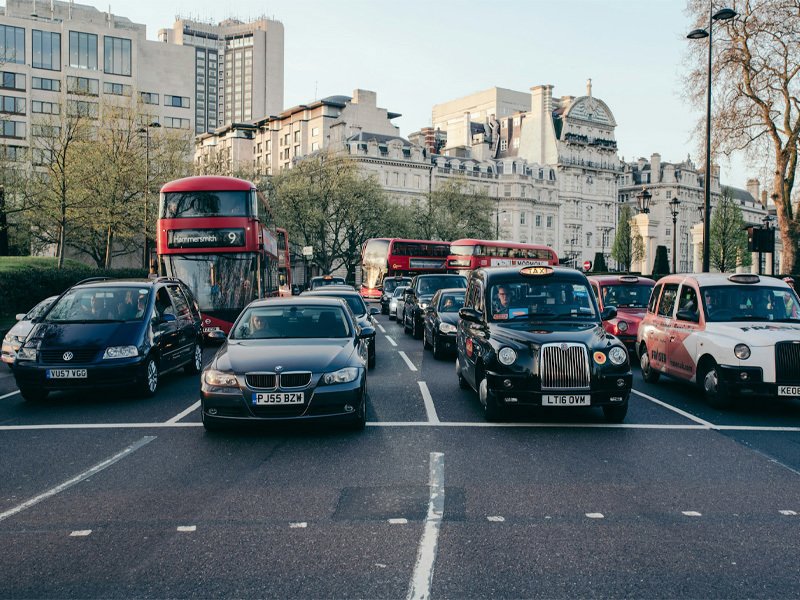
Type your number plate into a checker and you get your answer in about thirty seconds. That is the whole trick to this question — everything else in this guide is for the people who want to understand why the answer came back the way it did, what it costs when the answer is no, and what to do before buying a car that might fail it.
Short answer: a petrol car is ULEZ compliant if it meets Euro 4 (most petrol cars first registered from 2006 onwards), and a diesel car is compliant if it meets Euro 6 (most diesels first registered from September 2015 onwards). If your car meets the standard, driving anywhere in Greater London costs you nothing in ULEZ charges. If it doesn’t, it’s £12.50 for every day you drive inside the zone — and £180 if you forget to pay.
Start here: run your plate through our free ULEZ and clean air zone checker. It takes seconds, and it tells you the position for your exact car rather than a rule of thumb. Then read on for the detail.
How to check if your car is ULEZ compliant in 30 seconds
There are two checkers worth using, and they do slightly different jobs.
1. Our ULEZ checker (fastest). Enter your registration on our clean air zone and ULEZ compliance checker and you’ll get an instant read on your car. It’s free, there’s no account to create, and it works for the ULEZ and the other clean air zones around the UK as well.
2. TfL’s official vehicle checker (the definitive answer). Transport for London runs the ULEZ, so its checker is the final word. Go to tfl.gov.uk and search for “check your vehicle”, then enter your number plate. TfL’s checker also tells you about the Congestion Charge and the Low Emission Zone, which matter if your trip takes you into central London or if you’re driving something heavier than a car.
Use ours for speed, TfL’s before you spend money or buy a car. If the two ever disagree, TfL wins — the cameras read your plate against TfL’s records, not anyone else’s.
One warning that saves people real money: never trust a seller’s word, a windscreen sticker, or a screenshot of a check result. Enter the registration yourself, on your own phone, while you’re standing next to the car. A single wrong character turns a clean result into someone else’s car.
The Euro 4 petrol / Euro 6 diesel rule
ULEZ compliance comes down to one thing: your car’s Euro emissions standard. That’s the European classification for how much pollution an engine is allowed to produce, and every car sold in the UK since the early 1990s has one.
| Fuel type | Minimum standard | Usually compliant if first registered |
|---|---|---|
| Petrol cars and vans (up to 3.5 tonnes) | Euro 4 | From 2006 onwards (TfL’s own guide says “as new with the DVLA after 2005”) |
| Diesel cars and vans (up to 3.5 tonnes) | Euro 6 | From September 2015 onwards |
| Motorcycles and mopeds | Euro 3 | From 2007 onwards |
| Electric and hydrogen cars | — | Always compliant — zero exhaust emissions |
Those registration dates are rules of thumb, not the law. TfL is explicit about this: the ULEZ is enforced on the car’s declared emissions, not its age. Some cars registered before the cut-off dates still qualify — an early Euro 4 petrol from 2004, or a diesel that met Euro 6 ahead of the deadline — and a small number registered after the dates don’t. The date tells you what to expect; the checker tells you the truth.
Hybrids follow the same rule as any other car: a petrol hybrid needs Euro 4, a diesel hybrid needs Euro 6. Being a hybrid doesn’t earn you a pass on its own. Electric cars are the only ones that are compliant by definition, because there’s nothing coming out of an exhaust pipe.
If your car is a diesel and you want the detail, our guide to whether your diesel car is ULEZ compliant goes deeper on the diesel side — including the Euro 6b, 6c and 6d sub-standards and why some 2015 diesels pass and others don’t.
Where the ULEZ applies — and when
Since 29 August 2023 the ULEZ has covered all of Greater London: all 32 boroughs plus the City of London. It is not a central-London scheme any more. Croydon to Enfield, Heathrow to Dagenham — if you’re driving on a borough road, you’re in it.
Two boundaries people get wrong:
The M25 is not in the ULEZ. Even where the motorway clips the edge of Greater London, driving on the M25 itself doesn’t trigger the charge. The moment you leave it onto a London road, though, you’re in the zone.
It runs 24 hours a day, every day except Christmas Day. Nights, weekends, bank holidays — all charged. The charging day runs midnight to midnight, so driving in at 11pm and out at 1am counts as two charging days, not one.
It also pays to know where the ULEZ ends and the other London charges begin, because confusing them is how people end up with a penalty for a trip they thought was free. The ULEZ is about emissions and covers the whole city. The Congestion Charge is about traffic, covers only the small central zone, and costs £18 a day (since 2 January 2026) for almost every car regardless of how clean it is — a brand-new electric car still pays it in charging hours. And if you’re driving a lorry, a bus, or a van over 3.5 tonnes, you don’t pay the ULEZ at all: those vehicles fall under the separate Low Emission Zone, which charges £100 or £300 a day depending on the standard. Our UK clean air zones list for 2026 covers the zones outside London too, because seven other English cities run their own schemes with their own charges.
What it costs if your car isn’t compliant
| Situation | Cost |
|---|---|
| Non-compliant car, van or motorcycle driven in the zone | £12.50 per day |
| Paid late — Penalty Charge Notice (PCN) | £180 |
| PCN paid within 14 days | £90 |
| Compliant car | £0 |
The £12.50 is per day, not per journey. Drive in and out of the zone ten times on a Tuesday and it’s still one £12.50 charge for that day. A non-compliant car is never turned away or banned — the ULEZ is a charge, not a ban. You can always drive in; you just have to pay.
Payment is where the expensive mistakes happen. You can pay up to 90 days in advance, on the day, or by midnight on the third day after you drove in the zone. Miss that deadline and TfL issues a £180 penalty charge notice, reduced to £90 if you pay within 14 days of it being served. That is 14 times the daily charge for one forgotten payment — and TfL issued over 1.6 million of those notices in the 2025/26 financial year, so this is not a rare slip.
The practical fix is TfL Auto Pay. One account covers the ULEZ, the Congestion Charge and the Blackwall and Silvertown tunnel charges, and it takes the money automatically so there’s nothing to remember and no deadline to miss. If you drive a non-compliant car into London even a few times a year, set it up before your next trip, not after. If you’ve already received a penalty, you have 28 days from the date it was served to pay it or challenge it — and challenges succeed more often than people assume, particularly when the plate was entered wrong or the car was sold before the journey.
How to find your car’s Euro standard (without guessing from the year)
The year rule works for most cars, but “most” isn’t good enough when you’re about to buy a car or drive into London in a 2015 diesel. There are three ways to pin down your exact standard.
1. The reg checker — the only answer that counts. Your plate is tied to the DVLA’s records, which hold the declared emissions standard for your exact vehicle. Any reg checker — ours or TfL’s — reads that record. This is the answer the cameras use, so it’s the answer that matters.
2. Your V5C logbook — a useful cross-check. The emissions figures are printed on page 2 of the V5C under “Exhaust Emissions”, and section D.2 holds the type-approval details. The catch is that the logbook doesn’t always spell out “Euro 6” in plain words — matching the figures to a standard takes a table and some patience. Treat the logbook as a way to double-check the checker, not as a replacement for it.
3. The manufacturer. If the logbook is missing or the checker result looks wrong, the manufacturer can confirm the Euro standard from the VIN. Dealers do this routinely for used-car buyers, and it’s free to ask.
What doesn’t work: guessing from the badge on the boot, from the year alone, or from what a previous owner told you. Cars are type-approved in batches and there are always exceptions — the 2014 diesel that already meets Euro 6, the 2016 petrol that doesn’t meet Euro 4 because it was built for a different market. The plate check exists precisely because the year rule has exceptions.
Who doesn’t have to pay (exemptions and discounts)
Not every vehicle in the zone pays, even if it doesn’t meet the standard. The main exemptions and discounts are:
- Historic vehicles — cars built more than 40 years ago and registered in the historic vehicle tax class are exempt.
- Disabled tax class vehicles — vehicles in the disabled tax class, and wheelchair-accessible vehicles, can qualify for exemptions or grace periods. Check TfL’s list before assuming yours qualifies.
- Minibuses used by charities and community groups — a 100% discount is available for eligible vehicles used for community transport.
- Vehicles for disabled passengers — including some adapted vehicles and those used by disabled drivers, under specific TfL schemes.
- Military and emergency vehicles — exempt as you’d expect.
Two things that are not current savings, even though old articles still mention them: the resident discount that came with the 2023 expansion was temporary and has ended, and the mayor’s scrappage scheme — which paid up to £2,000 towards replacing a non-compliant car — closed to new applicants in September 2024. If a guide tells you to claim either of those today, it’s out of date.
Exemptions also aren’t automatic for every vehicle in those categories — some need to be registered with TfL first. A five-minute check on TfL’s site before you drive is cheaper than a £180 penalty afterwards.
Buying a used car? Check ULEZ before you pay
This is where the ULEZ question turns into real money. A non-compliant car is worth less in and around London than the same car that passes — buyers know they’ll be paying £12.50 a day or avoiding the capital altogether, and the price reflects it. The ULEZ check belongs in the same five minutes as the MOT and finance checks, before money changes hands.
The routine is short:
- Check the plate on TfL’s checker or ours. Do it yourself, on your own phone, while you’re looking at the car.
- Check the MOT history — it shows mileage, advisories and failures, and it’s free. Run it through our MOT checker with the same registration.
- Check the history properly. A free MOT check can’t tell you if the car has outstanding finance, has been written off, or is recorded stolen. For that you need a full history check — ours is the AutoAid full history check at £6.99, which covers finance, write-offs and stolen markers. A car that looks cheap because it’s non-compliant is one thing; a car that’s cheap because it still belongs to a finance company is a much worse problem.
- Check the V5C. The seller should have it, the name and address should match, and the emissions figures on page 2 should line up with what the checker said. If the logbook is missing, that’s a reason to slow down, not to hurry up.
None of this takes more than ten minutes, and it’s the difference between a bargain and a car you can’t afford to drive where you live.
If your car isn’t compliant, what are your options?
A non-compliant result isn’t a disaster — it’s a calculation. Work through the options in this order:
Pay per day. If you drive into London a handful of times a year, £12.50 a day is simply cheaper than changing cars. Set up Auto Pay so you never miss the deadline and turn £12.50 into £180.
Do the maths on a replacement. If you drive in daily, that’s £12.50 a day, five days a week — over £3,000 a year in charges alone, before fuel and the Congestion Charge. At that point the price gap between your car and a compliant one starts to pay for itself. Remember the compliant petrol cars go back to 2006, so a replacement doesn’t have to be new — a 2010 petrol hatchback passes.
Don’t count on a retrofit. Some older vehicles can be fitted with emissions-reduction equipment, but for ordinary cars the cost runs into thousands and TfL’s approval process is slow and narrow. For most drivers it’s not a realistic route.
Keep the car and stay out of London. Outside Greater London the ULEZ doesn’t apply, though the other clean air zones in Bath, Birmingham, Bristol, Bradford, Portsmouth, Sheffield and Tyneside have their own rules — check the list before a trip, not after.
Whatever you choose, don’t just keep driving in and hoping. ANPR cameras cover the zone and there is no warning letter before the first penalty — the penalty is the warning.
Frequently asked questions
Is my car ULEZ compliant if it’s a 2015 diesel?
Maybe — and this is the year where the rule of thumb is least reliable. Most diesels first registered from September 2015 meet Euro 6, but some registered in early 2015 don’t, and some from 2014 do. Enter the plate in the checker rather than guessing from the year.
Is my petrol car ULEZ compliant?
Almost certainly, if it was first registered from 2006 onwards — petrol cars need Euro 4, and the vast majority of petrols from 2006 meet it. Older petrols can still pass if they were type-approved to Euro 4 early, so check the plate if yours is a 2004 or 2005 car.
Does the ULEZ apply on the M25?
No. The M25 itself is outside the zone even where it runs through Greater London. The charge starts when you leave the motorway onto London roads.
Is there a ULEZ charge at night or on weekends?
Yes. The ULEZ runs 24 hours a day, every day of the year except Christmas Day. There is no off-peak or weekend exemption.
What’s the difference between ULEZ and the Congestion Charge?
The ULEZ is an emissions charge covering all of Greater London — £12.50 a day for non-compliant vehicles, nothing for compliant ones. The Congestion Charge is a traffic charge covering only the small central zone — £18 a day for almost every car, however clean it is, during charging hours (weekdays 7am–6pm, weekends and bank holidays noon–6pm). You can owe one, both, or neither on the same trip.
Can I drive my non-compliant car in London if I pay?
Yes. The ULEZ is a charge, not a ban — no car is turned away. Pay £12.50 by midnight on the third day after your journey (or set up Auto Pay) and you can drive anywhere in the zone. Forget to pay and it’s a £180 penalty, reduced to £90 if paid within 14 days.
If you haven’t already, run your plate through our free ULEZ checker — and while you’re there, check your MOT status too. Both take under a minute, and both are the kind of thing that’s much cheaper to know before a trip than after a penalty lands.